
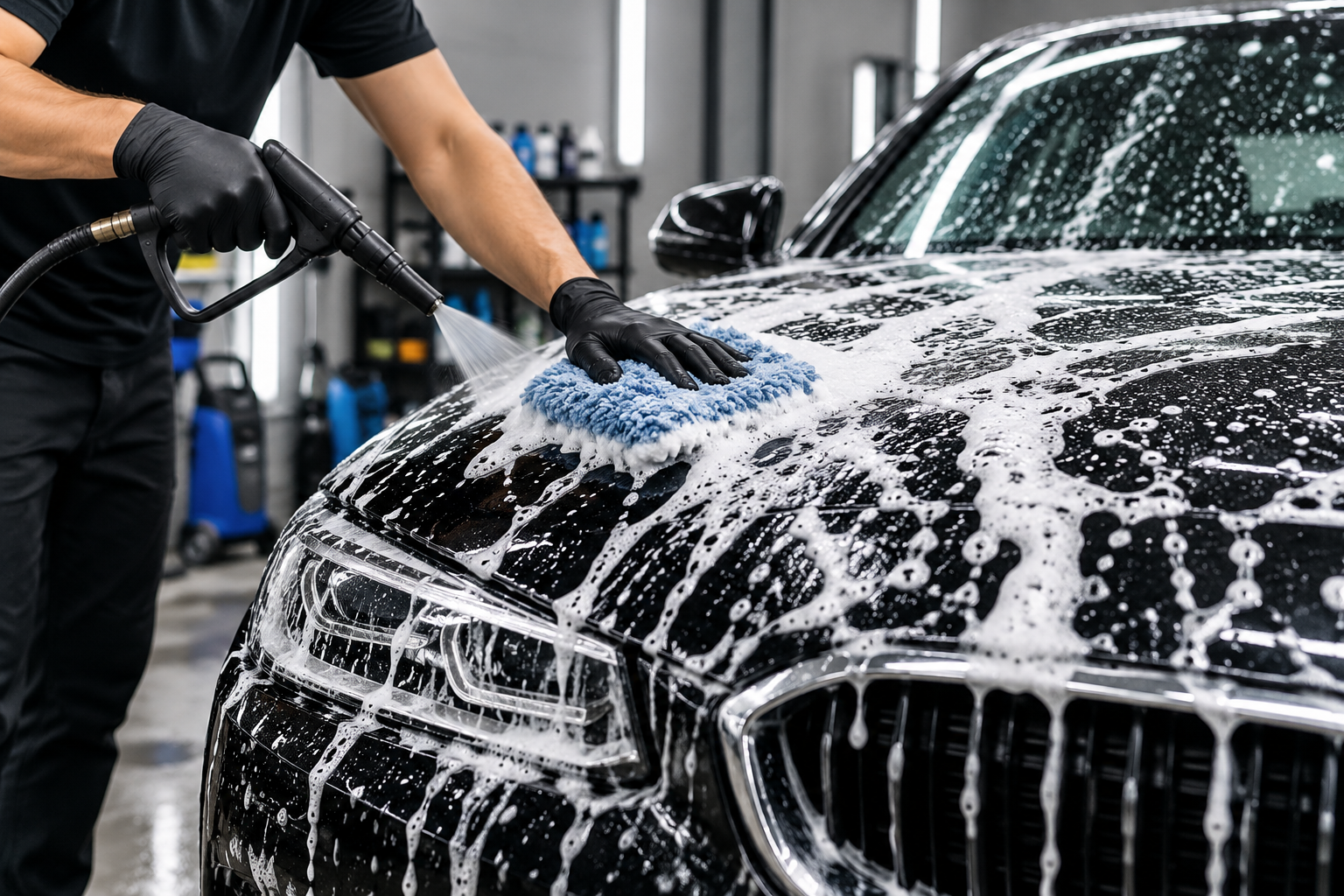
Washing a car should make it look cleaner, fresher, and shinier. However, sometimes the results do not meet expectations. Dust and dirt are indeed gone, but the paint surface still looks dull, lacks smoothness, or does not reflect light to the maximum.
Problems like this happen quite often. The cause is not always due to damaged paint condition. Washing methods, shampoo types, water quality, and even drying techniques also affect the final result.
If the car still looks less shiny after washing, do not immediately think you need to do polishing. Try checking a few habits during washing first. With the right technique and suitable products, you can keep the paint's appearance clean while keeping it better maintained.
Choosing the Wrong Car Shampoo
One of the reasons cars look less shiny comes from the cleaning products you use.
Some people still use dish soap or detergent because they are able to lift grease and dirt quickly. However, these products are indeed designed for household needs, not for caring for car paint surfaces.
Too strong of a formula can strip away the existing wax or protection on the paint. If this habit continues, the car's surface may feel rougher and look increasingly dull.
Therefore, use a shampoo specifically made for vehicles. Car shampoo helps clean dust, dirt, and light stains without being too aggressive on the surface.
You can also choose the wash and wax type for routine maintenance. Products like AutoGard Wash & Wax combining cleaning and waxing functions in a single washing process. This combination helps clean dirt while maintaining the glossy look of the paint.
However, wash and wax still has its primary function as a routine care product. If the paint has already experienced heavy oxidation, many swirl marks, or fairly deep scratches, you may still need polishing or paint correction.
Washing technique also determines gloss
The right product still requires the correct washing technique.
Do not immediately wipe a car that is still full of dust while it is dry. Dust, fine sand, and dirt can rub against the paint surface and cause micro-scratches.
Start by rinsing the entire body with water. This step helps reduce clinging dirt before you touch the surface with a wash mitt or sponge.
After that, use car shampoo and start from the top. Clean the roof, windows, hood, then move on to the doors and the lower part of the body.
The lower area usually holds more sand and heavy dirt. If you start from the bottom, the sponge can carry that dirt to other panels and increase the risk of scratches.
Avoid pressing the sponge too hard as well. Move it lightly and let the shampoo help loosen the dirt.
You also need to rinse the wash mitt or sponge periodically. Do not keep using a sponge that is full of sand or dirt.
Growing micro-scratches can disrupt the reflection of light on the paint. As a result, the car still looks dull even after you have cleaned it.
Water Spots Can Make Paint Look Dull
Besides the shampoo and washing technique, how you dry the car also has a big impact.
If you let water air-dry on a surface, the minerals in the water can leave spots or water spots. These stains usually look like white circles or water marks on paint and glass.
The more water spots there are, the harder it is for the paint surface to reflect light evenly.
Therefore, dry the car immediately after the rinsing process. Use a clean microfiber cloth with good absorbency.
Do not use rough cloths or cloths full of dust. Dirt on the cloth can scratch the surface when you wipe the body.
Washing time is also important. Avoid washing the car in direct sunlight, especially when the body is hot. High temperatures make water and shampoo dry faster, thereby increasing the risk of water spots.
Choose a shaded area and make sure the car's surface is not too hot before you start washing.
A Clean Car Doesn't Necessarily Have Healthy Paint
Washing the car only cleans the dirt on the surface. This process cannot completely remove oxidation, swirl marks, or fine scratches.
If the car is still less glossy even though you have already used the right shampoo, try checking the paint condition under bright light.
Swirl marks are usually visible as a circular scratch pattern when exposed to sunlight. These scratches scatter the light, making the surface look less reflective.
For such a condition, the car might need polishing. After the gloss returns, you still need to perform routine maintenance so the results last longer.
Use a vehicle-specific shampoo, avoid household soaps, wash with a gentle technique, and always dry the body after rinsing.
For routine maintenance, AutoGard Wash & Wax can help clean the car while maintaining the glossy paint appearance in a single wash process.
So, if the car has been washed but still looks less than shiny, do not just blame the paint condition. Recheck the shampoo, washing technique, drying method, and surface condition.
With proper washing habits, you not only make the car look clean, but also help keep its appearance glossy and well-maintained for longer.
 ID
ID  EN
EN