
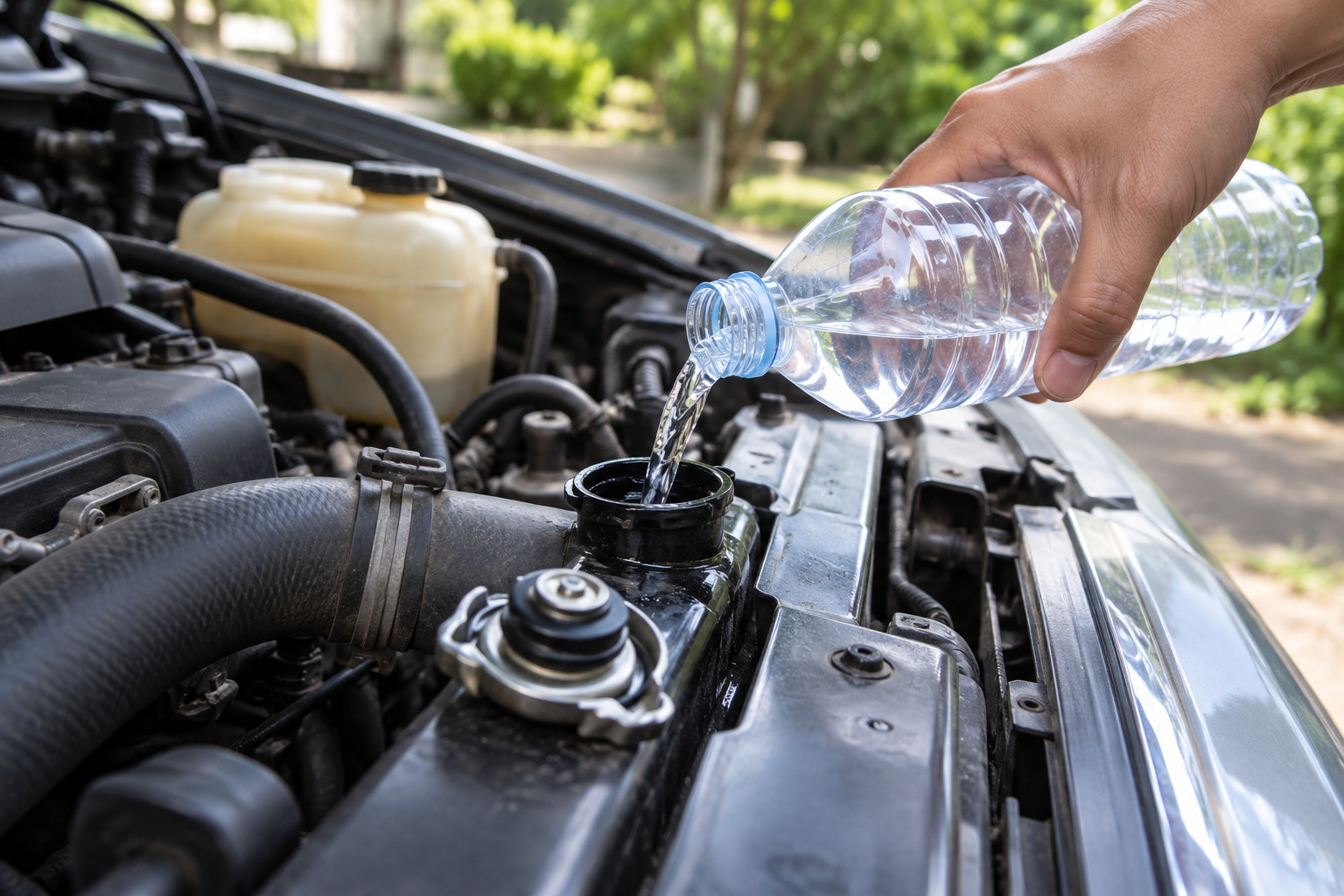
Many car owners still fill the radiator with plain water because they consider its function to be the same as coolant. As long as the engine temperature remains normal, this habit often feels safe. In fact, the engine cooling system operates under hot conditions and requires a fluid capable of maintaining temperature while protecting the components inside it.
Plain water can indeed absorb heat, but this liquid lacks special protection for the vehicle's cooling system. In the long run, the use of plain water can trigger rust, mineral scale, and even a decrease in radiator performance.
The problem is that the effect is not always immediately visible. The car may continue to run normally for months, but deposits and corrosion continue to develop inside the cooling system.
Therefore, do not just look at the engine condition from the temperature indicator. The type of fluid you use also determines the health of the radiator and other cooling components.
Plain Water Can Trigger Rust and Corrosion
The car cooling system consists of many metal components. The radiator, water pump, cooling channels, and even the interior of the engine are constantly in contact with liquid while the engine is running.
Plain water does not carry corrosion inhibitors like those found in coolant. If you keep using it, oxidation can start to appear on metal surfaces.
Rust that forms little by little can disrupt fluid flow. Rust particles can also spread throughout the system and accumulate in narrow channels.
This problem becomes more serious if you use tap water. Tap water usually carries minerals like calcium and magnesium. When the machine operates at high temperatures, these minerals can form scale.
Scale will adhere to the duct walls and reduce the system's ability to transfer heat. The thicker the deposit, the harder it is for the radiator to keep the engine temperature stable.
Ordinary Water Boiling Point Is More Limited
When the engine is running, the temperature inside the cooling system can rise quite high. The radiator system does use pressure to help raise the boiling point of the liquid, but the type of fluid still plays an important role.
Plain water has a lower capacity limit compared to coolants specifically formulated for vehicles.
Coolant usually contains a mixture of ingredients that help improve resistance to high temperatures while maintaining cooling performance.
If the liquid boils too quickly, vapor bubbles can form inside the system. This condition disrupts fluid circulation and reduces the heat-absorbing capacity.
In difficult situations, the engine temperature can rise faster and increase the risk of overheating.
Drivers who frequently face heavy traffic jams, steep inclines, hot weather, or long-distance trips need to pay closer attention to the condition of the cooling system. High engine loads cause the cooling system to work harder.
Coolant Does More Than Just Cool the Engine
Many people think that coolant is just cooling water with added color. In fact, coolant has a much broader range of functions.
Besides helping to control temperature, coolant also carries corrosion inhibitors that protect the inside of the radiator and cooling passages.
The coolant formula also helps reduce the buildup of deposits and keeps components functioning properly over the long term.
In some systems, the coolant also helps lubricate certain parts, such as the water pump seal. Therefore, the quality of the coolant can affect the service life of these components.
Coolant products like AutoGard CoolGard Radiator Cool can be an option for vehicle cooling system maintenance. The use of suitable coolant helps maintain cooling performance while providing protection against rust and corrosion.
However, you still need to follow the vehicle specifications. Every car can have different coolant requirements, especially in terms of type, additive technology, and replacement intervals.
Don't Wait for the Engine to Overheat to Change the Coolant
Another quite common mistake is waiting for a problem to appear before checking the radiator fluid.
In fact, you can prevent many problems with regular checkups.
Check the coolant level in the reservoir when the engine is cold. Make sure the fluid is between the minimum and maximum marks.
Also pay attention to the color and condition of the fluid. If the coolant looks cloudy, is very dirty, or has changed color, consider having it inspected further.
Do not just keep adding coolant without finding the cause if the fluid level frequently drops. Leaks in the hoses, radiator, reservoir, water pump, or other components can cause the fluid volume to decrease.
In addition, replace the coolant periodically according to the vehicle or product recommendation. For certain routine maintenance, an interval of around 20,000 km is often used as a reference, but always prioritize the instructions from the car manufacturer.
If the radiator system previously used regular water, consider inspecting the condition of the radiator before switching to coolant. Deposits and rust that have already formed may require prior treatment.
Using plain water certainly seems cheaper and more practical. However, that small savings can turn into a huge cost if the radiator gets clogged, the water pump has issues, or the engine overheats.
Therefore, do not take radiator fluid lightly. Use the appropriate coolant, check its condition regularly, and maintain the cooling system before problems arise.
With proper maintenance, you help the engine operate at the ideal temperature while ensuring that the radiator components last longer.
 ID
ID  EN
EN